

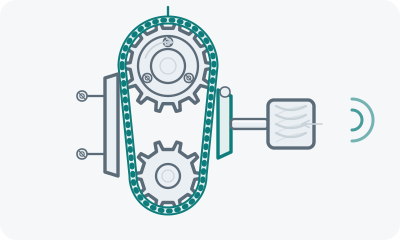
The timing belt is the toothed belt driving the valvetrain. It synchronises the crankshaft with the camshafts: while the belt is intact, the valves open exactly in step with the pistons. Its treachery is that it wears almost silently and breaks instantly — and on most modern engines a break means bent valves and an expensive repair. So the signs of wear are worth knowing in advance and checking without waiting for a noise.
Why belt wear is almost inaudible
A rubber toothed belt is a quiet part by nature: it does not rattle like a chain or grind like a bearing. Right up to the final stages of wear it works without acoustic warnings. Most “timing noises” on belt-driven engines come not from the belt but from its surroundings — the tensioner and idler pulleys and the water pump.
Hence the practical conclusion: on a belt-driven engine you cannot go by “I will change it when it starts knocking”. The main tools are the replacement schedule and visual inspection; sounds only add to the picture.
Visual signs: what to look for
On many engines the upper part of the timing cover comes off in a few minutes or has an inspection window. Inspect with a torch, turning the crankshaft by the pulley bolt so you see the whole belt:
- cracks on the back (smooth) side — the main marker of ageing rubber; a network of fine cracks means the life is nearly over;
- fraying and delamination at the edges — the belt is rubbing on an idler or pulley because of misalignment, and the cord threads are coming out;
- crumbled or undercut teeth — the precursor to teeth shearing under load; such a belt can jump tomorrow;
- a glossy sheen on the working side — the rubber has hardened and is slipping;
- traces of oil or coolant — fluids destroy rubber; the leak has to be fixed along with the belt, or the new one will not last.
Any one of these is grounds to replace the kit without waiting for the scheduled interval.
Indirect and audible signs
Sounds do happen, and they need reading correctly. Rhythmic ticking from behind the cover can come from a damaged belt tooth catching a sprocket; then again, valve clearances and hydraulic lifters tick similarly — the comparison is in hydraulic lifters ticking when cold and on the symptom page engine ticking.
Whistling and rustling from the timing area almost always mean the idlers rather than the belt — their bearings wear first; the detailed breakdown is in signs of worn timing belt idlers. The general description of drive whistling is on the symptom page belt squeal.
Finally, a belt jumping a tooth shows up with no sound at all: an uneven idle, loss of power, hard starting, a check engine light with camshaft correlation codes. The engine runs, but the timing is out — driving in that state is risky.
Sign, cause, urgency
| Sign | What it means | Urgency |
|---|---|---|
| Fine cracks on the back | Rubber ageing | Replace within the month |
| Fraying at the edge | Misaligned idler or pulley | Diagnosis this week |
| Crumbled teeth | Pre-failure condition | Replace immediately, better not to drive |
| Oil on the belt | A leaking seal destroying the rubber | Replace plus fix the leak |
| Ticking, whistling behind the cover | Idlers, a damaged tooth | Diagnosis this week |
| Uneven running, camshaft codes | A jumped tooth is possible | Workshop at once |
Intervals and how the job is decided
The typical schedule is 60,000–120,000 km depending on the engine, or 5–7 years by age: rubber ages without mileage. After buying a used car with an unknown service history, replacing the timing kit straight away is the sensible move — it costs less than any of the consequences.
What goes into the job matters as much as when. The kit means belt, idlers and tensioner; on engines where the water pump is driven by the same belt, the pump belongs in it too, because its labour is already paid for. Ask whether the crankshaft seal and the camshaft seals will be inspected while everything is off — an oil leak onto a new belt is the classic reason a correctly done job fails within a year.
One more thing workshops do not always volunteer: many belts must be tensioned with the engine turned by hand through two full revolutions and the tension re-checked, and some crankshaft bolts are single-use. A job done without those steps can look perfect and still be wrong.
If ticking, rustling or whistling can already be heard from the timing area, capture the sound: a recording in the Pro-Stuk app together with answers to a few questions helps work out whether it is the idlers, the pump or something more serious — and what to take to the workshop.
