

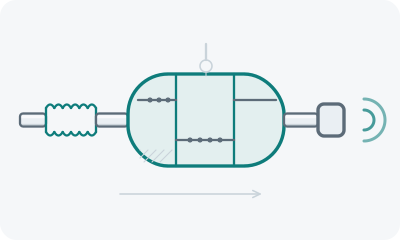
An exhaust roar after a cold start that fades as the engine warms is such a characteristic signature that you can form a preliminary diagnosis from it without a lift. That is how leaks through narrow gaps behave: while the metal is cold the gap is open and gases escape with a roar; a warmed system expands, the gap closes and the sound goes. Here is where such gaps appear, how to confirm the theory in five minutes, and how the repair is decided.
Where a cold roar comes from
- The exhaust manifold gasket. The classic: a burnt gasket between the cylinder head and the manifold gives a rasping roar from above, under the bonnet. As the manifold expands the gap is clamped and the sound disappears — the full breakdown is in signs of a burnt exhaust manifold gasket.
- A cracked manifold. Cast manifolds crack from temperature swings — after driving through deep water, for instance. The behaviour is the same: it roars cold and is silent warm.
- A micro-crack in the flex pipe. The flexible section with a torn braid hisses and roars when cold and is louder under load — see signs of a torn exhaust flex pipe.
- A joint after the converter. A burnt flange gasket leaks until warm-up; the sound is lower and duller, heard near the floor.
- The normal warm-up. Raised revs for the first minutes are normal, but they make any of the leaks above louder and more obvious.
If the roar does not fade after warm-up but stays constant, it is more likely a hole right through the system, covered in signs of a rotten silencer. And if bangs on lift-off come with the roar, start from the symptom page exhaust backfire.
Confirming the leak in five minutes
The check is done in the morning, on a fully cold car:
- Listen to the first seconds. Have a helper start the engine while you stand at the open bonnet. A manifold roar is heard from above and comes with a rapid rasp in time with the cylinders.
- Look for soot. Gases always leave a black trace where they escape. Inspect the manifold-to-head joint and the flanges with a torch — a soot trail identifies the leak better than any stethoscope.
- Time it. Note how many minutes it takes for the sound to fade. Two or three minutes is a thin gap at the manifold; ten or more means a bigger one, and delaying is riskier.
- Check its link to load. A torn flex pipe roars louder under acceleration even on a warm engine; a manifold gasket usually goes completely silent once warm.
If your ear is not giving you certainty, an old mechanic’s trick helps: a length of garden hose with one end at your ear and the other near suspicious parts of the system (on a cold engine only) works as a stethoscope and localises the leak to within centimetres.
One nuance: a cold engine produces more than exhaust roar. A knock in the first seconds after starting can come from the engine itself — from lifters to the timing chain; the lookalikes are collected on engine knock when cold.
What to fix and when
| Cause | How the sound behaves | The repair |
|---|---|---|
| Manifold gasket | Roars 2–10 minutes after starting | New gasket; the studs decide the labour |
| Cracked manifold | Roars cold, sometimes a thin whistle | Welding or a new manifold |
| Flex pipe | Roars cold and under load | New flex section welded in |
| Joint, flange | Leaks near the floor until warm | Gasket and fasteners |
| Rotten silencer | Constant rumble, louder cold | Weld a patch or replace the box |
The general logic: the closer the leak is to the engine, the more the labour costs and the less sense there is in waiting — a gap at the manifold grows fastest.
Why “it will clear when it warms up” is a bad plan
An exhaust leak is one of those faults that progress quietly. Gases at hundreds of degrees gradually wash away the metal around the gap, and one day a cold roar becomes a constant rumble. In parallel the engine’s accuracy suffers: air drawn in at the gap distorts the oxygen sensor readings, fuel consumption rises, and on some cars the check engine light comes on — so the metalwork repair gains an electronics hunt.
There is a seasonal argument too. In autumn a gap that closed after two minutes of warm-up in summer starts roaring for ten, and in winter frost the car wakes the neighbours. A repair at the first complaint in warm weather is always easier: the fasteners still undo rather than being cut off along with seized studs.
If you are unsure where exactly the roar comes from, record a cold start in the Pro-Stuk app: it matches the recording with your answers about when the sound appears and when it fades, and shows the likely causes with an urgency level — so you arrive at the workshop with a working theory rather than “something roars in the morning”.
