

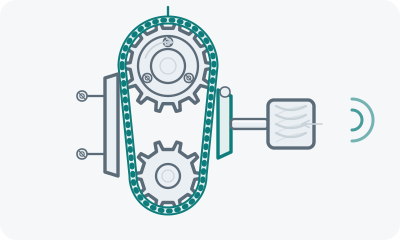
A cam phaser is an actuator on the camshaft sprocket that rotates the shaft relative to the chain and so changes the valve timing — when the valves open and close. Toyota calls the system VVT-i, Honda VTC, BMW VANOS, but the principle is the same: the actuator is controlled by oil pressure. That is exactly why a worn phaser is loudest at a cold start — and why the sound goes after a few seconds.
Why it rattles specifically when cold
While the car stands, oil drains out of the actuator and its passages into the sump. In the first seconds after starting there is no pressure and the rotor is not locked: the vanes flop in their chambers and knock against the walls with every pulse from the valve springs.
For that case a healthy actuator has a locking pin that mechanically locks the rotor until pressure builds. What wears is exactly that: the pin and its seat are hammered out, the lock stops holding — and the actuator rattles until oil arrives. The greater the wear and the longer the system takes to reach working pressure, the longer the rattle.
How it sounds and what it is confused with
The classic is a dry, hard rattle in the first one to three seconds after firing, resembling a diesel. The source is the upper front of the engine, the rocker cover area. Afterwards the engine runs smoothly, as though nothing happened.
The neighbours by sound:
- hydraulic lifters tick more quietly, more evenly and for longer — minutes rather than seconds, as covered in hydraulic lifters ticking when cold;
- a timing chain with a tired tensioner gives a rustle and chatter from the front cover, also short — signs of a failing timing chain tensioner;
- injectors tick constantly, at any temperature.
The general map of similar sounds is on the symptom page engine knock when cold.
The causes: actuator, valve, oil
Cam phaser rattle is always a story about oil pressure in the actuator, and that pressure is metered by an electromagnetic OCV — the oil control valve. So there are three culprits:
- The actuator itself — a hammered locking pin and worn vanes. Cured only by replacement.
- The OCV and its screen filter. A valve stuck with deposits or a blocked screen delays the oil supply — the actuator stays unlocked longer. Cleaning or replacing the valve is noticeably cheaper than the actuator.
- The oil. A low level, a viscosity outside the manufacturer’s specification, a stretched change interval — all of that lengthens the dry seconds after starting. The cheapest and the most common cause.
Judging the stage
| How it shows | Likely cause | Where to start |
|---|---|---|
| Rattle 1–2 seconds, not at every start | Early locking pin wear | Fresh oil to specification |
| Rattle at every start, 3–5 seconds | Actuator wear, partly blocked OCV | Diagnosis, clean the OCV |
| Rattle plus rough idle plus check engine | The actuator is not delivering the timing | Workshop this week |
| Rattle audible when warm too | Deep actuator wear | Replacement, usually with the chain |
Sound is only part of the picture: a worn actuator gradually spoils power, consumption and idle stability. The full list — from flat spots to fault codes — is in signs of a failing VVT actuator.
How the repair is decided
Work from cheap to expensive. First an oil and filter change strictly to specification. Then checking and cleaning the OCV. If the rattle remains, a diagnostic scan shows how far the actual valve timing lags the commanded value.
Replacing the actuator is almost always combined with the timing chain — the parts are neighbours and most of the labour is shared. Ask for the quote to state which of the two is being replaced and why, and whether the OCV screen was cleaned: a new actuator fed through a blocked screen rattles exactly like the old one.
Dragging it out for years is not sensible: a hammered actuator accelerates chain wear, the engine loses power and starts using more fuel.
Not sure it is the phaser rattling? Record a cold start in the Pro-Stuk app — the algorithm compares the sound with typical profiles, takes your answers about the moment and duration of the rattle into account and shows the likely causes with an urgency level.
