

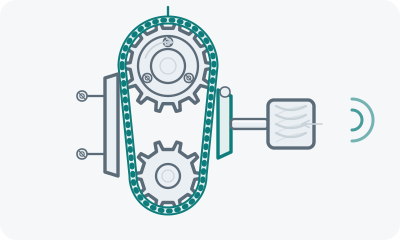
The timing chain tensioner is a small hydraulic cylinder that keeps the valvetrain chain taut. While it works, the chain runs quietly and precisely; once it weakens, noises appear that owners often take for “engine knock” and prepare for the worst. In fact the tensioner is one of the most common and comparatively inexpensive reasons for a noisy chain drive, and its symptoms are worth recognising.
How the tensioner works and why it depends on oil
Inside the tensioner is a plunger that engine oil pressure pushes out, pressing the chain through a shoe. A check valve holds the oil in, and many designs also have a mechanical ratchet stopping the plunger retracting fully when the engine stops.
Hence two weak points. First, the quality and level of the oil: dirty oil wears the plunger and the valve, a low level leaves the tensioner without support. Second, standing: overnight some oil drains from the body, and in the first seconds after starting the tension comes only from the spring and the ratchet. On a new unit that is enough; on a worn one it is not.
The main sign: noise in the first seconds of a cold start
The classic picture is metallic clatter, chatter or ticking right after a cold start, dying away within one to five seconds. That is the slack chain whipping the guides until the plunger builds pressure. One or two seconds on some engines is a design quirk; five or more, at every start, with a tendency to lengthen, is typical tensioner wear.
It matters to separate that sound from its neighbours. A sharp whistle when cold is the accessory belt. The general overview of cold-engine knocks is on the symptom page engine knock when cold, and the listening method in checking timing chain tension by ear.
Other signs of failure
- Rustling and ticking at idle. An under-tensioned chain oscillates and rubs the guides even on a warm engine — a noticeably more serious stage, described in what a stretched timing chain sounds like.
- A metallic knock when blipping the throttle and lifting off. As the load changes, the chain’s slack shifts and the run slaps the shoe.
- Camshaft timing fault codes. The ECU notices the crankshaft and camshafts are out of step (codes such as P0016, P0017), the check engine light comes on, and an unstable idle and loss of power may follow. The same codes come from a VVT actuator — signs of a failing VVT actuator.
- Noise that follows oil pressure. The sound grows on a hot engine at idle (when pressure is lowest) and disappears with revs — the signature of hydraulics rather than mechanics.
If a foreign sound is constant and ignores temperature, the whole spectrum of causes is on the symptom page knocking in the engine.
The stages: from a quirk to an emergency
| Stage | What you hear | What to do |
|---|---|---|
| Design normal | Ticking for 1–2 seconds cold, no trend | Watch the oil |
| Early wear | Clatter for 3–5 seconds at every cold start | Diagnosis at the next service |
| Marked wear | Rustling at idle, a knock on a throttle blip | Measure the chain stretch within weeks |
| Critical | Constant clatter, timing codes, loss of power | Workshop at once, risk of a jump |
How the repair is decided
The danger of a worn tensioner is not the noise but the fact that it no longer insures the chain against jumping. A chain that jumps a tooth throws the timing out, and on most modern engines what follows is the valves meeting the pistons and a repair with the cylinder head off — the scenarios are set out in a broken timing chain: consequences by engine. Against that, replacing a tensioner is minor work.
Two things decide the job. First, the measurement: whether the chain’s stretch was actually measured — by the tensioner’s extended length, the ratchet position or the cam timing offset on a scan tool — rather than guessed. A new tensioner on a stretched chain buys months, not years. Second, the oil: if the old oil was black and overdue, the cause of the wear is still in the engine, and a fresh tensioner will meet the same abrasive.
At higher mileages the whole kit is replaced: chain, tensioner, guides and sprockets, because the labour is shared and worn guides destroy a new chain quickly.
The easiest way to show the problem to a workshop is with the sound. Record a cold start in the Pro-Stuk app — it matches the recording with typical fault sounds, takes your answers into account and rates how urgently a mechanic is needed.
