

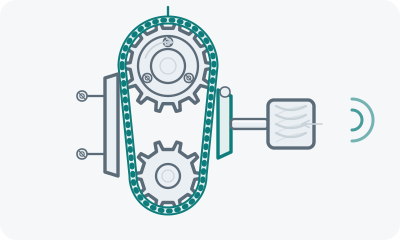
A couple of seconds of metallic rattle right after turning the key on a winter morning worries many owners — not always with reason. That sound has two typical sources, and both share one circumstance: while the engine stood, the oil drained into the sump, and the components that work on oil pressure were left without it. The first source is the timing chain with its hydraulic tensioner. The second is the cam phasers, the actuators that rotate the camshaft relative to its sprocket using oil pressure. Here is how to tell one case from the other without dismantling the engine.
Why it knocks specifically when cold
A hydraulic chain tensioner works like a piston: a spring pushes it constantly and oil locks it in its working position. Overnight the pressure falls, the tensioner partly collapses, and on the first revolutions the chain sags. The slack run strikes the shoes and guides — producing a short chattering rattle.
A cam phaser is built similarly: its vanes are held by a locking pin and oil pressure. Without pressure the rotor flops within its clearance and knocks against the housing — a sharper, more individual sound, often a few distinct clicks. As soon as the oil pump builds pressure, both components take up their working positions and go quiet.
Telling them apart
| Sign | Chain and tensioner | Cam phaser |
|---|---|---|
| Duration | Rattle stretches to 3–10 seconds or more | Usually 1–3 seconds, less often |
| Character | Chattering, like a handful of nails | Sharp individual clicks, metallic ring |
| Trend over months | Gradually lengthens from start to start | Stable for years, follows the oil |
| On a warm engine | Rustle on lift-off from 3,000 rpm | Silence |
| Fault codes | Sometimes camshaft correlation | Often variable valve timing codes |
The main differentiator is the trend. A stretched chain does not come back: if six months ago the rattle lasted a second and now lasts five, the chain theory moves ahead. A phaser behaves more consistently and reacts more strongly to the oil’s condition. The stages of chain wear are in signs of a stretched timing chain, the phaser’s own portrait in cam phaser rattle when cold and signs of a failing VVT actuator, and the general sound portrait of cold starts on the symptom page engine knock when cold.
What to check before the workshop
- The oil. Level, age, viscosity. Thickened or worn-out oil lengthens the pause before pressure arrives and provokes the sound in both scenarios.
- A recording. Start recording before you turn the key and hold it for twenty seconds. That captures both the duration and the character of the rattle — the two parameters the mechanic needs.
- Fault codes. A scan shows whether there are variable valve timing or camshaft correlation codes.
- Behaviour on a warm engine. A rustle or hum from the timing drive on lift-off is an argument for the chain. The same principle of listening to the conditions rather than the sound works in signs of a worn idler pulley.
How the repair is decided
The difference between replacing a chain and rebuilding an engine is the best argument for not postponing the diagnosis once the rattle has clearly lengthened.
Ask specifically what a chain quote includes: a chain without the tensioner, shoes and guides is rarely replaced on its own, because worn guides quickly stretch a new chain too. That is why quotes list a kit rather than a single part.
And on the phaser side, ask whether the oil control valve and its screen were cleaned before the actuator is condemned — a phaser fed through a blocked screen rattles exactly like a worn one, and cleaning costs a fraction of the part.
If you are unsure whether your sound is within normal, record the cold start in the Pro-Stuk app on several consecutive days. The app breaks the recording down by character and duration and shows the likely causes with percentages — and comparing the recordings with each other shows by itself whether the sound is stable or growing.
