

A short dry crackle exactly as the clutch pedal goes down is more frightening than it deserves: behind that sound there is far more often a dried-out bush than a repair with the gearbox out. But the reverse happens too. Here is what actually crackles when the pedal is pressed, and how three signs tell you whether the source is outside or inside.
What takes part in a clutch release
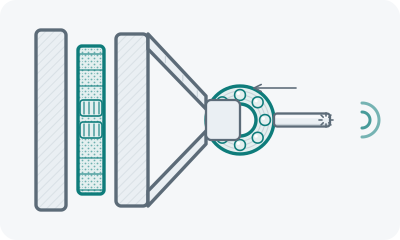
Pressing the pedal sets a whole chain in motion. In the cabin it is the pedal itself on its pivot with plastic bushes and a return spring. Then comes the actuation — a cable, or hydraulics with a master and slave cylinder. At the gearbox the effort is taken by the clutch fork, pivoting on a ball stud, which passes it to the sleeve carrying the release bearing, sliding along the input shaft guide sleeve. The bearing presses the fingers of the diaphragm spring and the disc moves away from the flywheel.
A crackle can be born in any of those places, but it sounds different in each. A metallic, grating crackle usually means friction without lubrication: the fork against its pivot, the sleeve against the guide. A dry plastic click is almost always the pedal box. An even whine or rustling that lasts the whole time the pedal is down, on the other hand, is the bearing; that case is covered in whine with the clutch pressed.
Outside or inside the bellhousing
| Sign | More likely outside | More likely inside |
|---|---|---|
| Where it is heard | In the cabin, at the pedal | Under the bonnet, left of the gearbox |
| Audible with the engine off | Yes, clearly | No, or very faintly |
| Reaction to greasing the fork pivot | The crackle goes | No change |
| Companion signs | None | Pedal vibration, clutch slip |
| Scale of the fix | A small workshop job | Gearbox out |
The most informative test is the engine off. Press the pedal several times with the car stationary and the engine stopped. Everything that crackles and clicks with the engine off is in the mechanical part of the actuation: the pedal, the cable, the fork. Everything that only appears with the engine running is connected with rotating parts — the sleeve, the bearing, the pressure plate. A related case is a knock as the pedal comes back up, covered in a knock when releasing the clutch.
Common causes in descending order of likelihood
First place goes confidently to the pedal box: the plastic bushes on the pivot wear, the spring starts to click, and in frost it is especially audible. Second is the fork’s ball pivot and its boot: the grease washes out and the fork scrapes on the pivot at every press.
Third is the input shaft guide sleeve the release bearing slides along: wear there gives a crackle with a slight binding feel in the pedal. Fourth is the pressure plate fingers: if they are unevenly worn, the bearing catches on them with a characteristic chattering sound. Fifth, and rare, is a clutch cable with a chafed outer. The overall state of the assembly, judged by the combination of signs, is covered in signs of a worn clutch, and the related engine shake on the symptom page vibration at idle. The fork pivot case on a specific model is set out in Ford Focus clutch fork knock.
How the repair is decided
The criterion is the engine-off test, and it splits the work into two completely different jobs. While the crackle is audible with the engine off and comes with neither pedal vibration nor clutch slip, start at the cheap end of the list: greasing and rebuilding the pedal box or the fork pivot is a small workshop operation. Moving on to a conversation about removing the gearbox is only justified when greasing the actuation changed nothing, or when signs of clutch wear itself have appeared.
Two things mechanics do not always say. If the gearbox does have to come off, the guide sleeve and the fork pivot are replaced together with the clutch kit — they are inexpensive, and reaching them a second time costs the whole labour again. And a dual mass flywheel, if fitted, is assessed at the same time, since it is the one item that can double the bill — signs of a failing dual mass flywheel.
If it is hard to tell where the sound comes from — the cabin or under the bonnet — record it in the Pro-Stuk app twice: with the engine off and with it running. The app compares the recordings with your answers and shows the likely causes with percentages, so the conversation at the workshop starts from the right end.
