

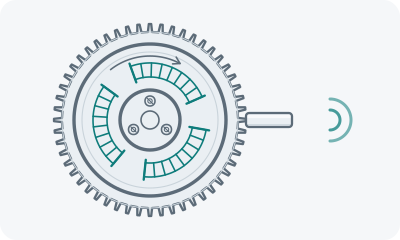
A dual-mass flywheel is a part most drivers first hear of at the moment it needs replacing. Its purpose is a noble one: to absorb the pulses with which a piston engine turns the crankshaft, so that a smooth flow of torque reaches the gearbox. For that the flywheel is split into two rotating parts joined by springs and a friction damper. Those springs sag over time, the internal grease is used up, and the part starts producing a set of quite recognisable sounds. Here they are in order and by stage.
Rattling at idle and when switching off
The first sign is a metallic rattle or light ringing from where the engine meets the gearbox, at idle. It grows on a warm engine and often disappears if you press the clutch: disconnected from the gearbox, the flywheel stops being shaken.
The second early marker is a thump or short knock at the moment you switch the ignition off. As it stops, the crankshaft passes through a resonance, and tired damper springs collapse with a perceptible clack. On a healthy unit shutdown is soft and almost silent. The general breakdown of noises that show up at idle is on the symptom page vibration at idle, and the full sound portrait in what a worn dual-mass flywheel sounds like.
Vibration when pulling away and at low revs
Next comes the tactile part. Vibration appears when pulling away, especially releasing the clutch gently on light throttle: the car shakes as though it is about to stall, although the revs hold. At low revs in a high gear, hum and shake through the body join in — a healthy damper ate those pulses, a worn one passes them straight through.
A characteristic marker is that the vibration grows specifically under load: uphill, with a full car, overtaking in too high a gear.
Telling the flywheel from its neighbours
| Sign | Dual-mass flywheel | Release bearing | Engine mounts |
|---|---|---|---|
| Rattle at idle | Present, fades with the clutch pressed | Appears with the clutch pressed | No |
| Reaction to the clutch pedal | The sound goes | The sound arrives | Unchanged |
| Thump when switching off | Characteristic, repeatable | No | A dull nudge is possible |
| Vibration when pulling away | Pronounced | No | Present, but with a body lurch |
| Dependence on road speed | None, only on revs | None | None |
The key divider is the clutch pedal. If the sound appears when you press it, the question is the release bearing — signs of a worn clutch release bearing. If it fades instead, the flywheel is the suspect. If the pedal changes nothing while the engine visibly nods as you select a gear, start with the mounts — signs of worn engine mounts.
Remember too that some “engine area” noises do not come from inside at all: the accessory belt and its idlers have their own repertoire, covered in can you drive with a squealing belt.
How the repair is decided
An honest flywheel diagnosis is only possible with the gearbox off: the free rotation angle between the two masses is measured, along with run-out and any signs of overheating. Indirect evidence of wear is damper grease thrown onto the bellhousing. Because of this the flywheel is almost always replaced together with the clutch: removing the gearbox is the bulk of the labour, and there is no sense in doing it twice.
Two questions worth asking. Whether the flywheel was measured or judged by eye — the free angle is a number, and a workshop that gives it is answering the question. And what else is included while the box is out: the clutch kit, the release bearing and the rear main seal are all reachable only now.
The figures involved are serious, which makes it all the more painful to replace a flywheel when cheap mounts were to blame. So the sensible order is to rule out the simple things first: mounts, misfires, the release bearing.
If the rattle at idle is already audible and you want to know which group it belongs to, record it in the Pro-Stuk app twice — with the clutch pedal up and pressed. The app matches the recordings with your answers to a few questions and shows the likely causes with percentages.
