

The 1.6-litre EP6 engine was fitted to a great many Peugeot and Citroën models, and it has a recognisable set of complaints. One of them is phrased as “the balance shafts are knocking”: the owner hears a low vibrating knock at the lower front of the engine, usually when cold, and goes looking for an explanation. Below is an honest breakdown: what actually produces that sound on this engine family, and the order in which it is checked.
What lies behind the phrase
The name of the component is secondary here: what matters is that the sound is described as a dull, slightly vibrating rattle from the lower front of the engine, lasting the first seconds or minutes after starting. On the EP6 several quite specific things match that description, and a balancing mechanism is far from first on the list.
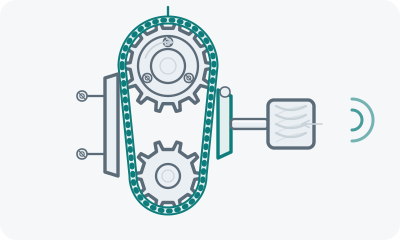
- The timing chain and its tensioner. The most common answer. The tensioner runs on oil, and until pressure builds the chain strikes the guides — signs of a failing timing chain tensioner.
- The cam phasers. The camshaft actuators give a short rattle in the first seconds if their locking pin has worn — signs of a failing VVT actuator.
- Contaminated oil passages. The engine is sensitive to oil quality and change intervals; coked passages delay the supply.
- Accessory components. Idlers and the belt tensioner add their own overtones, which mix with the engine’s.
- Engine mounts. A sagged mount turns normal vibration into a distinct knock through the body — signs of worn engine mounts.
The general sound portrait of that group is on the symptom page engine knock when cold.
Why the timing drive is checked first
Because on this engine it genuinely does wear, and because the cost of being wrong is high. A stretched chain first makes noise only at start-up, then for longer, then at idle on a warm engine, and finally it can jump a tooth — with all the consequences for the valves. The stages of that process are set out in signs of a stretched timing chain.
The second argument is how accessible the check is. Removing the rocker cover and inspecting the tensioner gives an answer at once, while hunting for rare causes requires far more disassembly.
There is a third, purely practical argument. The EP6 has a reputation as an engine sensitive to servicing: it copes badly with stretched oil change intervals, cheap oil outside its specification, and constant short trips where it never reaches operating temperature. All of that hits first the components that live on oil pressure — the chain tensioner and the cam phasers. So a conversation about the sound almost always begins with “when was the oil changed, and with what”, and that is not an evasion but the shortest route to the answer.
How a workshop checks it
| Step | What is done | What it gives |
|---|---|---|
| Interview | When the oil was changed and which one | Eliminates half the theories |
| Scan tool | Camshaft correlation and misfire codes | Indirectly shows drifted timing |
| Stethoscope | Listening to points cold and warm | Localises the source |
| Accessory belt off | A brief run | Separates the engine from the alternator and idlers |
| Rocker cover | Inspecting the chain, shoes, tensioner | A direct assessment of wear |
| Mounts | Rocking the engine under load | Reveals a sagged mount |
It is also worth confirming that the sound comes from the engine at all. Whines and hums from the engine bay often come from the alternator — how that looks is shown in Chevrolet Cruze: alternator bearing whine.
How the repair is decided
The practical advice for this engine: do not chase an exotic diagnosis until the basic theories are closed. Fresh oil of the correct specification, an honest change interval and a timing drive renewed in time solve the vast majority of knock complaints, and cost less than any deep investigation.
Two things worth asking when the timing drive is quoted. Whether the complete kit is included — chain, tensioner, guides and sprockets — since a new chain on worn guides returns the problem quickly. And whether the oil control valve screens were cleaned: on an engine with a neglected service history they are the reason the phasers rattle in the first place, and a fresh actuator fed through a blocked screen behaves exactly like the old one.
If you want to capture the sound before it changes, record it with the Pro-Stuk app in the first seconds after a cold start. The app matches the recording with your answers to a few questions and shows the likely causes with percentages — and the saved recording is useful a month later for telling whether things have got worse.
