

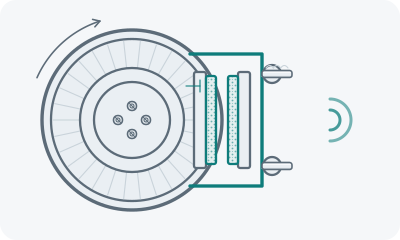
Grinding differs from squealing the way a scratch on glass differs from the squeak of chalk: it is a low, coarse, distinctly metallic sound, audible with the windows shut, that gets stronger as you press the pedal. Unlike a morning squeal it is almost never harmless. Practically always it means the friction material is used up and metal has come into contact with the disc — either the pad backing plate or the dedicated wear indicator. So the question is not whether to repair it but how much time you have to reach a workshop.
What exactly is grinding
There are only three variants, and they differ in loudness and persistence.
The first is the metal wear indicator: a thin tab fixed to the pad so that it starts touching the disc when the friction material reaches its minimum thickness. The sound is intermittent, high, often audible while coasting without touching the pedal. It is a built-in warning: the brakes still work, but there is almost no reserve left. Its exact sound is described in the brake pad wear indicator sound.
The second is a worn-out pad. The pad’s metal backing rubs directly on the disc. The grinding is loud and constant, grows with pedal effort, and deep circular grooves appear on the disc. Every stop in this state eats disc thickness.
The third is a foreign object. A stone or a fragment caught between the disc and the dust shield gives a similar grinding, but one that is not linked to the pedal and often disappears by itself. A simple observation separates it from wear: an object sounds the same with the pedal pressed and released.
How far you can drive
| Situation | What to do |
|---|---|
| Intermittent grinding, brakes hold well | Book the workshop for the next few days |
| Constant grinding at every stop | Drive to the workshop, avoid longer trips |
| Grinding plus a longer stopping distance | Drive only to the workshop, calmly, with space ahead |
| Grinding plus a soft or sinking pedal | Do not drive, call a tow truck |
| Grinding plus the car pulling under braking | Do not drive, call a tow truck |
| Grinding plus a burning smell and a hot disc | Stop, let it cool, call a tow truck |
A practical guide is tens of kilometres of town driving without hard braking. But any situation from the lower half of the table cancels that allowance: a brake system that has stopped holding pressure, or works unevenly, is dangerous no matter how far the workshop is.
The rule about load deserves separate mention. Worn pads shed heat worse, and a long descent or a loaded car turns a tolerable situation into an emergency within minutes. The full set of wear stages by sound is on the symptom page grinding when braking.
What grinding is not
Other sounds get taken for grinding, and then new pads do not solve anything. An even low hum that grows with speed and ignores the pedal is a wheel bearing or the tyres, and that case is covered in a hum that grows with speed. Noise that appeared right after a tyre change is almost always explained by the tread pattern; see a hum after changing tyres.
The quick check takes one manoeuvre: accelerate, lift off and coast without touching the brake. If the sound is unchanged, it is not from the brakes. If it disappears and returns when you press the pedal, it is.
How the repair is decided
The first question is what the disc’s condition allows. Every disc has a minimum thickness stamped on it, and grooves cut by a backing plate often take it past that figure. A workshop that measures the disc with a gauge and tells you the number is answering the question; one that says “we will skim them and see” is not. Skimming is only worth it while the disc stays inside the limit afterwards — otherwise the money goes on a part that has to be replaced in a month anyway.
The second is why the pads wore unevenly. One-sided wear is a caliper question, not a pad question: sticking slide pins or a seized piston will finish the new pads exactly as they finished the old ones. Servicing the slide pins — cleaning, new boots, the right grease — is cheap while it is done alongside a pad change and expensive as a separate visit later.
The arithmetic is simple: a set of pads costs noticeably less than a pair of discs, and every week of driving with grinding shifts the budget from the first option towards the second. If the grinding started on a Friday, it is cheaper to spend Saturday at a workshop than to run it for a month.
When the sound is there but it is unclear whether it is the wear indicator or the backing plate, a recording helps: the Pro-Stuk app analyses the frequencies, matches them with your answers to a few questions about when the sound appears and shows the likely causes with percentages — including an assessment of whether the car should be driven at all before it is inspected.
