

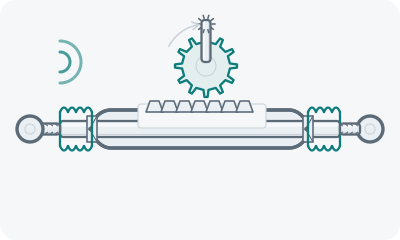
EPS is electric power steering: an electric motor on the steering column or directly on the rack that assists the driver on command from a torque sensor. Unlike hydraulics there is no pump, fluid or hoses, so the signs of a fault are different too: EPS almost never makes noise — it changes the effort at the wheel or reports the problem outright with a light on the dash. Here are the typical symptoms, their causes, and what you can check yourself before a workshop visit.
Typical symptoms and their causes
| Symptom | Likely cause |
|---|---|
| The steering is permanently heavy | Motor, control module or fuse failure |
| Assistance disappears intermittently | Voltage drop, overheating, torque sensor |
| Different effort left and right | Torque sensor, less often rack mechanics |
| The wheel pulls by itself | Torque sensor or a lost centre calibration |
| The EPS light on the dash | The module has logged a fault — needs a scan |
| Knocks, clicks in the column | Play in the shaft, the universal joint, the worm gear |
A separate word on sounds. A light whirr from the electric motor when you turn the wheel while parked is normal on many cars. Knocks and clicks, however, mean mechanical play: in the steering shaft’s universal joint or in the assistance gearbox’s worm gear, which wears over time. A worn CV joint gives similar sounds — the differences are on the symptom page clicking when steering, and worn steering joints in signs of worn track rod ends.
Why EPS fails
Electric power steering is a chain — torque sensor, control module, electric motor — and there is a weak link at every stage.
- Power supply. EPS is one of the biggest current consumers on the car. A tired battery, corroded terminals or a poor earth cause voltage drops, and the module switches the assistance off — most often at full lock, when the current is highest.
- The torque sensor. It measures how hard the driver is turning the wheel. Its drift gives the most insidious symptoms: uneven effort left and right, self-steering, jerks.
- The electric motor. Brushes wear, gearbox grease ages — the assistance wanders and a motor hum appears under load.
- Overheating. During long parking manoeuvres the module can go into protection; after cooling the assistance returns.
Telling EPS from other causes of heavy or noisy steering
The first question is which type of power steering the car has. If there is a reservoir of fluid under the bonnet and a belt-driven pump, it is hydraulic, and its ailments are different: whining when you turn, especially near the lock stops — the breakdown is in power steering whine when turning. EPS has no reservoir and does not follow engine revs.
The second question is whether the symptom is linked to motion. Electric power steering behaves the same parked and moving. If a foreign noise appears only on the move and grows with speed — a hum that increases in a curve, for instance — it is not the assistance but the running gear; a typical example is in humming when turning left and on the symptom page humming when turning.
The third pointer is the light. EPS monitors itself: almost any serious failure comes with a steering or EPS symbol on the dash and a stored fault code.
What to check yourself, and how the repair is decided
Three steps are available before the workshop. Check the battery and the terminals: a voltage drop is behind a good half of EPS glitches, especially in winter. Find the power steering fuse from the diagram in the box lid — it is rated for a high current and occasionally blows. And note the pattern: whether the symptom appears when hot, in heat, at full lock — those details help the diagnostician a great deal.
Then comes the diagnostic scan, which reads the module’s fault codes and shows the torque sensor’s live data. The repair that follows varies enormously: from cleaning terminals to replacing the sensor or the motor.
Two things worth asking before agreeing to a part. Whether the fault is stored as current or historic — an intermittent code with a healthy live data trace usually means supply problems rather than a dead motor. And whether the steering angle sensor will be calibrated after any work: on most cars with EPS and stability control, skipping that leaves the assistance off-centre and the warning lights on.
If you are unsure whether a noise in the steering belongs to the assistance, record it in the Pro-Stuk app: make a recording during a stationary manoeuvre and one on the move, answer a few questions, and the app matches the picture with typical fault profiles and suggests the likely cause and how urgent a visit is.
