

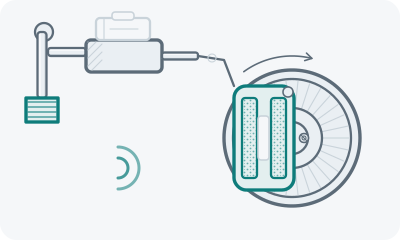
A rustle from a wheel is easiest to hear pulling out of a car park: 10–30 km/h, a window open, the music off, and a dry swishing sound comes from one wheel in time with its rotation. On a motorway it drowns in tyre and wind noise, so many drivers only notice it while parking and write it off as nothing. Sometimes that is right. But a rustle has exactly two addresses — the brake mechanism and whatever turns with the hub — and they can be told apart without a lift.
What a rustle sounds like, and how it differs
The key marker is that it follows wheel rotation rather than road speed or engine revs. At 15 km/h you can hear individual contacts about half a second apart; the faster the car goes, the more they merge into a continuous swish. Coast in neutral and the sound does not change — the engine has nothing to do with it.
Its character helps separate it from other noises. It is dry and high-pitched, with no low bass note. An even low hum that grows with speed is a wheel bearing story, covered on the symptom page humming while driving and in signs of a worn wheel bearing. A sharp high squeal when you press the pedal is a different subject again — see squealing brakes.
Five sources to start from
| Source | How it shows |
|---|---|
| A pad touching the disc | Constant rustle, gone for a second or two after braking |
| A stone behind the dust shield | Sharp, scratchy, often clears itself within 1–2 journeys |
| A bent dust shield | Metallic ringing rustle, louder over bumps |
| The pad wear indicator | Intermittent scraping rustle that comes and goes |
| Early bearing wear | Soft swishing, grows with speed, changes in curves |
The first row is the most common. A pad in a healthy mechanism does not come fully away from the disc: the clearance is tenths of a millimetre, and a light touch is normal on almost every modern car with disc brakes. It becomes a problem when the caliper slide pins seize and the pad is no longer pressed symbolically — the signs are in signs of a seized brake caliper.
A check that takes one evening
- The neutral test. Accelerate to 25–30 km/h and coast without throttle. If the rustle remains, the source turns with the wheel.
- The braking test. A short moderate stop. If the rustle then disappears for a few seconds and returns, it is almost certainly the brake mechanism: the pad moves clear for a moment.
- The turning test. Gentle curves left and right at 40–50 km/h. If the volume changes, suspicion moves to the wheel bearing.
- Inspection. With the wheel off, look at the caliper: unevenly worn disc, scoring, a bent shield are visible at once. Friction material under 3 mm means new pads.
- The heat check. After calm driving with little braking, if the suspect wheel’s disc is noticeably hotter than the others, the pad is sticking.
If pedal feedback or judder has joined the rustle, the disc–caliper–hub chain is worth looking at as a whole.
How urgent it is
A rustle is not an emergency sound in itself: the car brakes, the steering does not vibrate, the trip to work is fine. It becomes dangerous in two cases — when the rustle has grown into metallic grinding (the friction material is down to the backing and the disc is being cut by metal), and when one wheel is consistently hotter than the others. The first means the price of a disc will soon join the price of pads; the second means the caliper is holding the pad pressed and heating the brake fluid, as covered in telling brake pad wear by ear.
Two things are worth asking for when it does go in. That the slide pins are cleaned and greased rather than just glanced at — that is what cures most cases of a lightly dragging pad. And that the dust shield is straightened or replaced if it is bent: a shield touching the disc rustles for free and gets blamed on pads that had years left.
Telling a harmless touch from the start of wear by ear is not easy — the difference between “swishing” and “swishing with metal in it” barely survives being put into words. It is simpler to record the sound in the Pro-Stuk app while pulling out of the car park: the app matches the recording with your answers to a few questions and shows the likely causes with percentages, so it becomes clear whether to go in at the weekend or wait calmly for the next service.
