

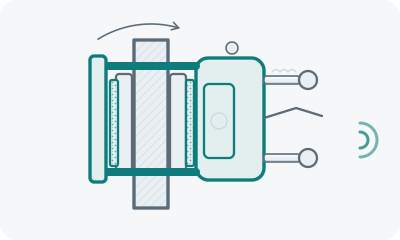
A single knock as you press the brake pedal is more alarming than a squeal: a squeal reads as cosmetic, a knock as something about to fall off. In practice there are two sources, and they differ greatly in seriousness. The first is a pad moving within its fitting clearance in the caliper carrier. The second is the caliper itself: loose fasteners, worn or seized slide pins, hammered seats. The first case is mostly harmless, the second needs attention, and they can be separated before the car goes up on a lift.
Pads: a click as the direction changes
A pad does not sit rigidly in the carrier — otherwise it could not move as it wears. The clearance is by design, and the pad is located by anti-rattle shims and springs. When the shims are lost, corroded or were forgotten during a replacement, the pad moves more freely and strikes the carrier as the direction of force changes.
Hence the sound portrait: a single dry click at the first braking after pulling away, sometimes when shifting from reverse to forward, occasionally as the pedal is released. The sound does not repeat during the stop and does not depend on how hard you press. How pad wear sounds at different stages is covered in telling brake pad wear by ear, and the pulling-away version of the same clunk in a single clunk when pulling away and braking.
The caliper: a knock with a sequel
A caliper gives a different pattern. A loose slide pin or carrier bolt lets the unit shift under braking torque — the knock is duller and repeated, often with feedback through the pedal and a perceptible tug at the wheel. A seized slide pin moves in jerks, the pad sits at an angle, and uneven wear, a hot wheel and the car pulling appear — signs of seized caliper slide pins.
| Sign | Pads | Caliper |
|---|---|---|
| Character | A single click | Dull knock, sometimes repeated |
| Moment | First press after pulling away | At any point in the stop |
| Dependence on pedal effort | None | Grows under hard braking |
| Feedback in the pedal and wheel | No | Often yes |
| Wheel temperature | Normal | One wheel noticeably hotter |
| Pad wear | Even | Tapered or unequal side to side |
The practical rule: if the knock is single and lives only in the first metres after a start, begin with the pad fitting kit. If the knock accompanies braking and is felt through the wheel, check the caliper’s fasteners and slide pins.
What else knocks under braking
Pressing the pedal overloads the front suspension, and it answers. A worn ball joint, a worn front control arm bush and a sagged strut mount all knock as the car dives. Telling them apart is not hard: a suspension knock is heard over bumps with no braking at all, while a brake knock is tied strictly to the pedal — the ball joint’s own signs are in signs of a worn ball joint, and the general catalogue of braking sounds is on grinding when braking.
If the sound comes from below and is linked to neither the pedal nor the steering, check the things that are simply loose — see noise underneath: exhaust or undertray.
How the repair is decided
A caliper service — stripping, cleaning and greasing the slide pins with new boots — is the work worth doing at every pad change: it costs little and removes half of the future knocks and squeals.
Two things worth asking for. That the pad fitting kit goes in with the pads: the shims and springs that locate a pad are consumables and are often left in the box. And that the caliper and carrier bolts are torqued rather than done up by feel — some are single-use, and a bolt that works loose is exactly the version of this fault that matters.
Brake knocks are rarely reproducible on demand at a workshop. Record the sound in the Pro-Stuk app twice — at the first braking after pulling away and during a gentle stop from 60 km/h. From the difference between the recordings the app shows the likely causes with percentages and suggests which part to have looked at first.
