

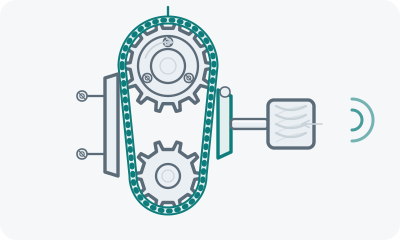
A chain timing drive is considered “for life” — and that is exactly why its symptoms are often missed. A chain does not break in a day: it stretches gradually, the tensioner takes up more and more travel, the guides wear down, and the engine’s sound changes slowly, step by step. On the mass-market Nissan engines fitted to the Almera and Qashqai the wear pattern is recognisable enough to hear yourself. Here is how it develops and when it is time for a workshop.
How it sounds, stage by stage
Stretch passes through several steps, and the sound differs at each.
- First. A short rustling rattle right after a cold start, a second or two, until the tensioner fills with oil. Silence on a warm engine.
- Second. The sound lengthens to several seconds and appears not just some mornings but almost always. Sometimes audible at idle after sitting at a long traffic light.
- Third. A metallic rustle persists on a warm engine, especially at idle, and changes on a throttle blip.
- Fourth. Behaviour joins the sound: wandering idle, loss of pull, camshaft position fault codes, hard starting.
The first two stages are time to plan the repair calmly. The third and fourth are a reason not to postpone. The general sound portrait of such noises is on the symptom page engine ticking, with the full list of signs in signs of a stretched timing chain and the risks of continuing in can you drive with a stretched timing chain.
What accelerates the wear
A chain wears not so much from mileage as from operating conditions. The main factor is oil: it both lubricates the chain’s joints and feeds the tensioner. Thickened, worn-out oil means that at every start the drive runs almost dry for a few seconds while the tensioner builds pressure more slowly.
Next in importance come short town journeys (many cold starts per kilometre), long change intervals taken from the manual without allowing for traffic and dust, and a low oil level, which lets the pickup catch air in corners and under acceleration.
What is checked at a diagnosis
| Step | What is looked at | What it gives |
|---|---|---|
| Scan tool | Camshaft and crankshaft position codes | Indirect evidence of shifted timing |
| Oil inspection | Level, condition, change date | Rules out half the theories at once |
| Cam cover off | Chain slack, state of the guides | A direct assessment of wear |
| Tensioner position | How much travel is already used | Shows the life remaining |
| Listening | The point of maximum sound | Separates the drive from other parts |
An important nuance: a cam phaser gives a similar short rattle at cold start, and telling them apart by ear does not always work first time — cam phaser rattle when cold and a cold knock: timing chain or cam phasers. Another frequent source of confusion is noise that actually comes from below, from the transmission; how that behaves is shown by the example in Renault Duster transfer case whine.
How the repair is decided
The drive is replaced as a kit: chain, tensioner, guides and dampers, usually with a cover gasket and seals. Do not economise on the kit: a new chain on an old tensioner stretches noticeably faster, and the engine will have to come apart again — and that strip-down is the bulk of the labour, not the parts.
Two things worth asking before agreeing to the work. Whether the water pump sits in the timing drive on your engine: if it does, it is replaced at the same time, because reaching it later costs the whole job again. And what the cam timing offset measured on the scan tool, in degrees — that figure, not the sound, is what separates “watch it” from “replace it”.
One thing mechanics do not always say: after the repair the engine wants fresh oil and an early first change, and the oil regime that stretched the first chain has to change too, otherwise the new one follows the same path.
Ask the mechanic separately where the sound actually comes from: whistling and whining at the front of the engine bay has nothing to do with the chain — those sources are covered in alternator belt squeal: the causes.
If it is unclear which stage your case is at, record the sound in the Pro-Stuk app at a cold start and a second time on a warm engine. The app compares the recordings with your answers and shows the likely causes with percentages: a good way to work out whether you have time in hand.
